
If you just realized your church or nonprofit has six months to raise the money for your program, you do not have time to guess. You need a clear plan, clear steps, and a clear way to move people.
Most leaders try to start fast. The real key is to start right.
Because the first 30 days decide whether the campaign grows or collapses.
This guide gives you the exact moves to make in your first month so you can raise real money with confidence, not panic.
This is the part most people never teach you.
Step 1: Get Honest About How Much You Actually Need

Do not start fundraising until you know the real number.
Not the number you hope for.
Not the number you think donors want to hear.
The number it actually costs to run your program at the level your community deserves.
Sit down and answer:
- What does it cost to run this program for six months
- What does it cost if demand increases
- What does it cost to do it well instead of barely surviving
- What safety margin protects you if something goes wrong
Write it down. Make peace with the truth.
People are willing to give when leaders know what they need.
Step 2: Identify Your Major Donors First

Your biggest money will not come from the general public.
It will come from the handful of people who already believe in you.
In 30 days, make this list:
- Top ten people with capacity
- People who gave big in the past
- People who love your program
- People who trust your leadership
- People who have influence
These are the first people who need to hear from you.
Not in a mass email.
In a direct, personal conversation.
This step alone can make or break your next six months.
Step 3: Build the Case for Why This Matters Today

Your community already knows your program is “good.”
They need to know why it is urgent.
They need to know why it is now.
Your case should include:
- Who your program helps
- What happens if the program pauses
- What happens if the program stops completely
- One life or family that shows the impact
- Why this funding is needed within six months
People give when they understand the cost of doing nothing.
Step 4: Clean Your Donor List
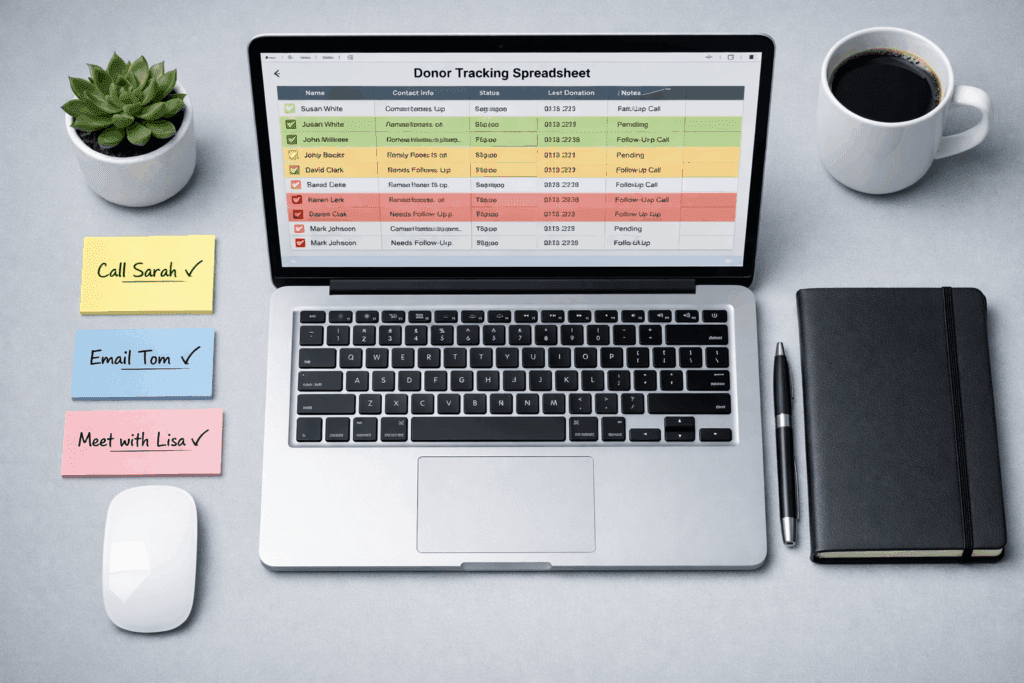
A messy donor list will slow everything down.
Before you ask for one dollar, your list should be organized so you know:
- Who gave
- When they gave
- How much they gave
- How they prefer to be contacted
- Who has not been followed up with
If your donor list is a piece of paper, an old spreadsheet, or a memory in someone’s head, fix that now.
Your future depends on it.
Step 5: Build Your Follow-Up Plan Before Your First Ask
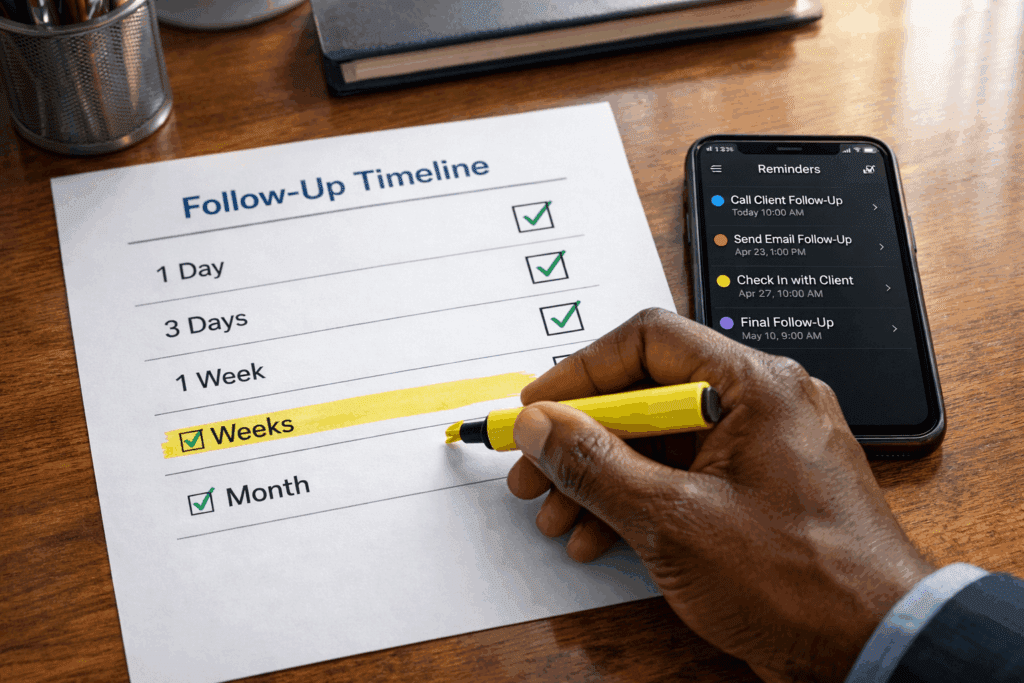
A campaign is not one ask. A campaign is a journey.
Before you launch, write out:
- When you will update donors
- What reporting you will send
- How you will thank people
- How you will keep donors engaged
- How you will follow up on every gift
Your follow-up plan needs to be real and written.
Donors give more when they hear from you consistently, not when you remember.
Step 6: Create Your First 3 Campaign Assets
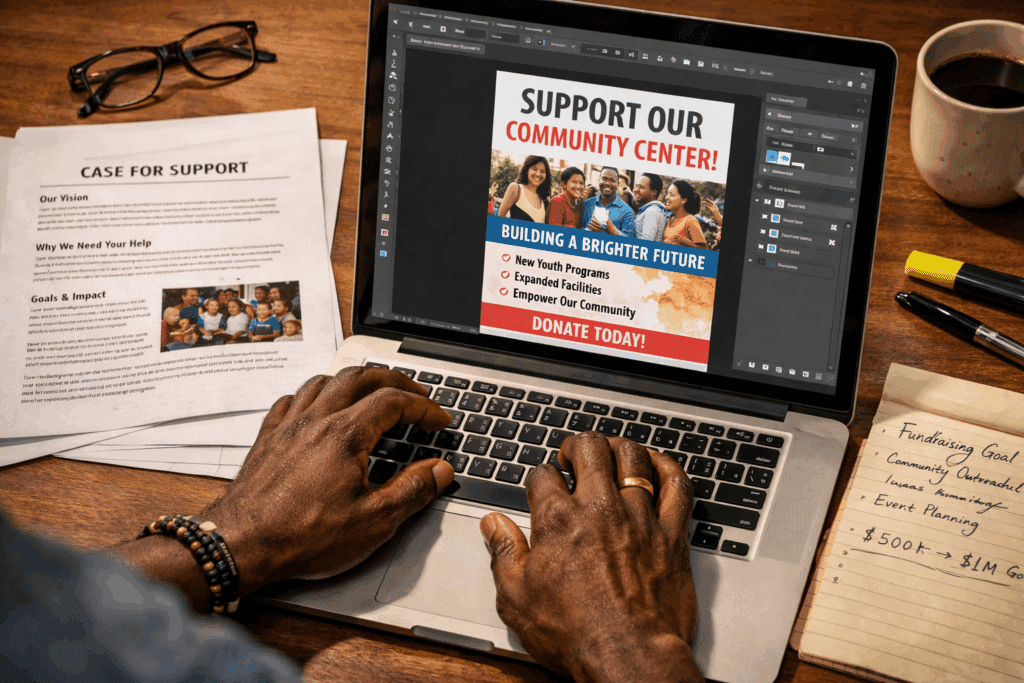
You only need three things to start:
- A one-page case for support
- A clear giving page
- A simple email or script for outreach
These do not need to be fancy. They need to be clear.
People want to give, but they need to understand where their money is going.
Step 7: Assign Responsibilities

Do not run your campaign alone.
Assign tasks like:
- Who is calling major donors
- Who is sending follow-up thank-yous
- Who is updating the giving page
- Who is tracking gifts
- Who is sending weekly updates
The first 30 days collapse when one person tries to do everything.
Step 8: Set Your 30-Day Goals

Your goals for the first month should be simple and doable:
- Ten major donor calls
- Your case written and finalized
- Your donor list cleaned
- Your giving page built
- Your campaign timeline mapped
- First outreach message sent
If you do these steps, your campaign has momentum.
If you skip these steps, you will spend the next six months stressed and chasing dollars.
The Truth

You can raise real money in six months.
Black churches and Black-led nonprofits do it every year.
But you need structure.
You need clarity.
You need a partner in the work.
You do not have to carry this alone.
If these steps feel heavy or overwhelming, that is exactly why the Jubilee Campaign exists.
It is the six-month partnership you need to raise real money with confidence, strategy, and support.
Book a Jubilee Strategy Call
Let’s build the structure your community programs deserve.


I’m writing to request for financial assistance for our poorest ophans, widows, and widowers within our church and remote areas in zambia luapula province district kawambwa.
I would want to help them with there financial challenges as follows:
1, food 2, Clothing’s 3, medicals 4, school issues and daily consetrants.
Would you be able to donate funding to them whether a one time donation or on going, will improve there standard of living financially, spiritually, physically, mentally, emotionally and get closer to God.
Thank you for your time and considerations.
Best regards,
Gilbert mambwe,(pastor).