

As I was reviewing Pew Research Center’s newest national report, The Decline of Christianity in the U.S. Has Slowed, May Have Leveled Off, which draws on data from the comprehensive 2023–2024 Religious Landscape Study (RLS), I immediately thought about how these findings speak directly to the work of African American pastors. This study is one of the most extensive examinations of religious identity in the United States, surveying more than 12,000 adults nationwide. It closely examines Christian affiliation, religious practice, belief, and, especially, the generational shifts affecting every congregation. While the headline focuses on Christianity’s slowing decline, deeper insights reveal realities, challenges, and opportunities that uniquely affect African American churches. I’ve taken the time to dissect this study specifically for African American pastors so we can understand what the data means for our ministries, our people, and our approach to fundraising going forward.
1. Christianity in the U.S. has stopped declining—for now
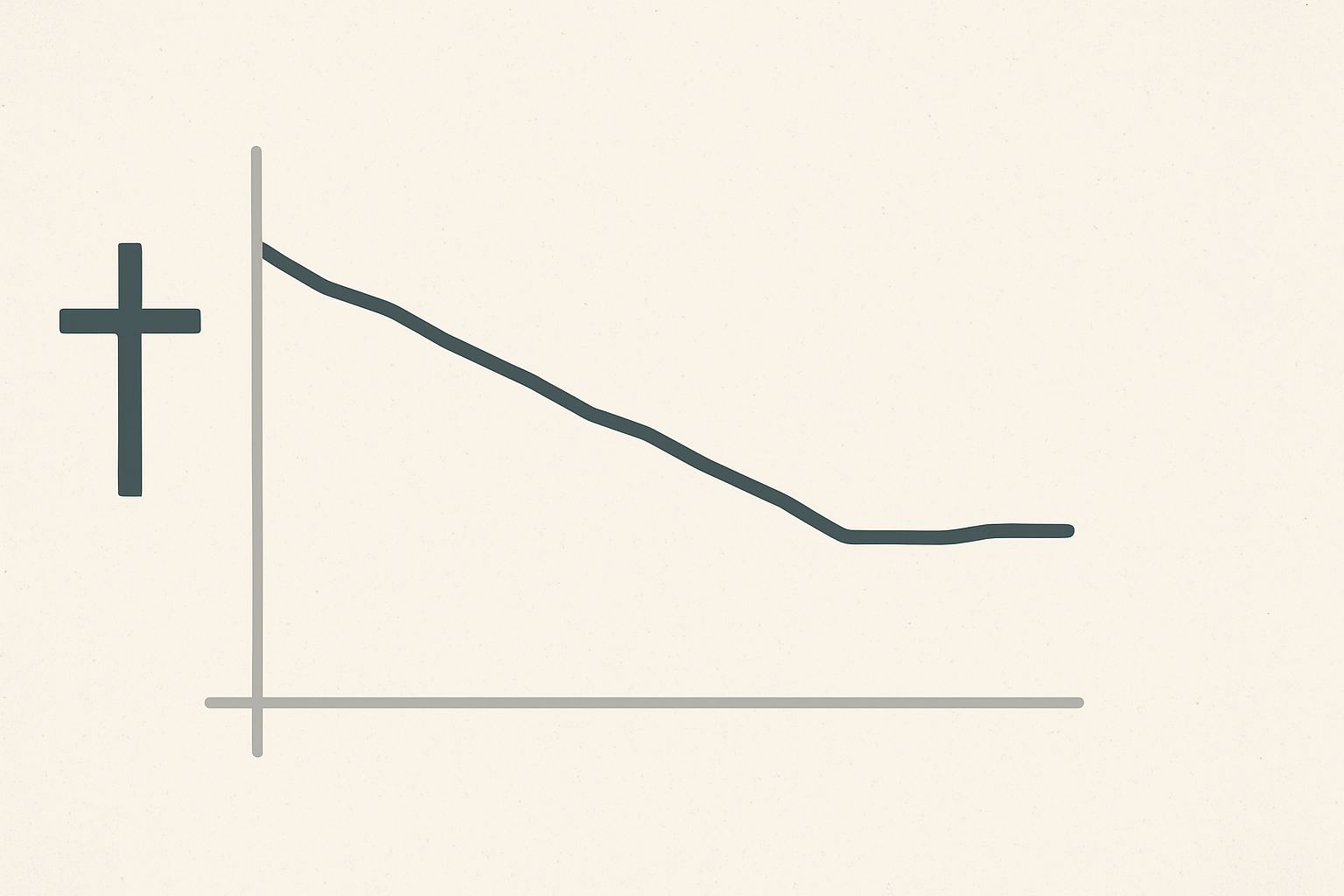
For nearly two decades, the story across America has been the same: fewer people identifying as Christian, fewer attending church, fewer connecting with religious institutions. But for the first time in a long time, the newest Pew Research data tells a different story. The rapid drop has slowed — and may even have leveled off. Roughly 60–64% of Americans still identify as Christian.
This pause doesn’t mean the battle is won. It means the decline has stopped speeding up. It’s a moment of breathing room — a window for churches to move, clarify their mission, strengthen their ministries, and reconnect with younger generations before the curve drops again.
This is not a moment for panic. It’s a moment for strategy.
2. African American Christians remain one of the strongest faith communities
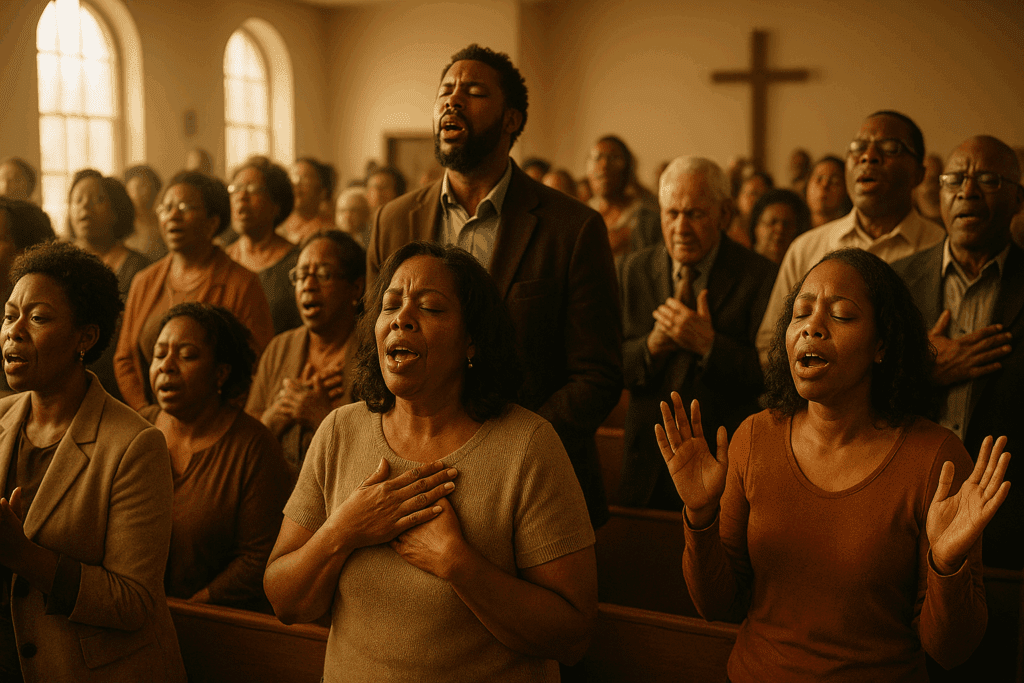
Even as national numbers have shifted, African American communities continue to show among the highest levels of faith commitment in the country. Historically, the Black Church has been the spiritual heartbeat, the social pillar, and the most trusted institution in Black communities.
Black adults continue to pray, believe, attend, serve, and support at higher levels than almost every other demographic in the country. This strength is not accidental — it comes from centuries of the church being the place where our people found hope, safety, dignity, and direction when society offered none.
The Pew data confirms what we already knew:
The Black Church is still strong. And when it works, it works powerfully.
3. The biggest challenge is generational
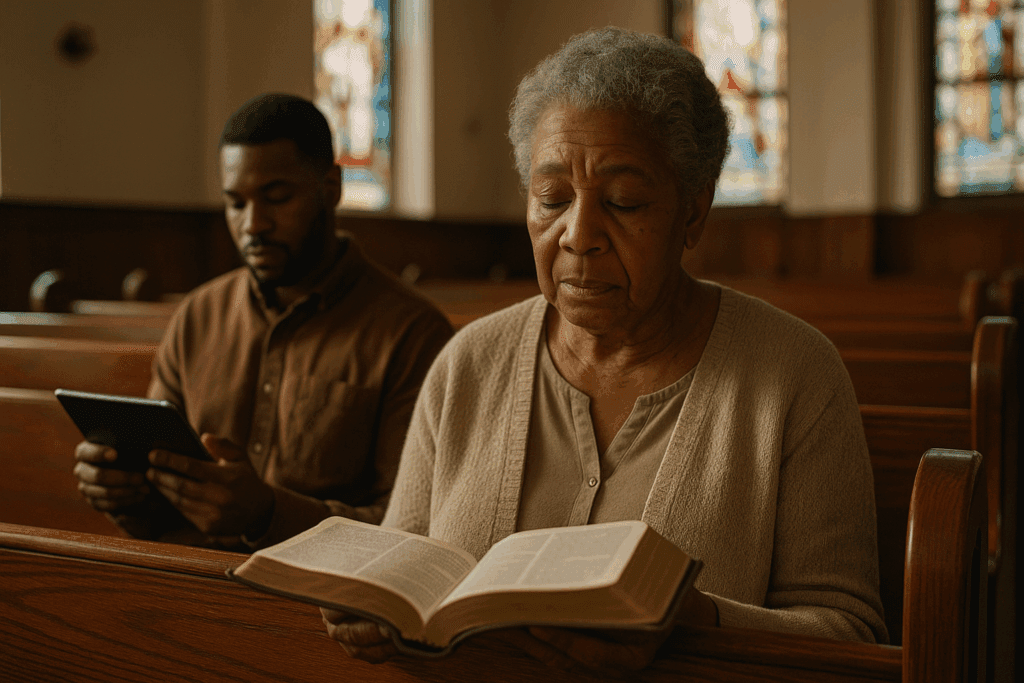
While older Black adults remain deeply connected to the church, younger African Americans are expressing their faith differently. They still believe. They still pray. Many still feel connected to God and spirituality. But they don’t always see the church as the automatic place to practice that faith.
Younger adults carry more questions about leadership, transparency, and relevance. They want purpose, community, and authenticity — not just programming. They’re spiritual, but they don’t automatically trust institutions, including the church, the way older generations do.
This isn’t rebellion. It’s a shift in how the next generation experiences faith. And it invites the church to evolve, not abandon its roots.
The good news?
They’re not rejecting God — they’re asking the church to meet them where they are.
4. Younger adults respond differently from older adults

For older adults, tradition, commitment, and institutional loyalty were enough. Younger adults, however, prioritize connection over ceremony. They gravitate toward leaders who are transparent, honest, and driven by mission.
They want to know why something matters.
They want to know who it helps.
They want to see results.
They respond to:
- Short, honest storytelling
- Real people with real struggles
- Ministries that address real community needs
- Leaders who communicate openly, consistently, and personally
They will not follow simply because “this is how we’ve always done it.”
They will follow when the ministry aligns with their values and their desire for justice, purpose, and impact.
5. The opportunity for churches is enormous

Even though younger adults attend less, this generation is spiritually wide open. They care deeply about their communities. They show up for issues of justice, mental health, youth development, food insecurity, and education. And they want to be part of something that actually makes a difference.
This is a moment for churches to:
- Tell their stories better
- Share their impact more consistently
- Rebuild trust intentionally
- Highlight programs that change lives
- Show what faith looks like in action
The Pew data doesn’t signal the end of the Black Church. It signals a crossroads — one where churches that embrace transparency, relevance, and spiritual authenticity will thrive.
Younger people are not gone. They’re waiting for churches to show them something worth belonging to.
6. The takeaway for African American pastors
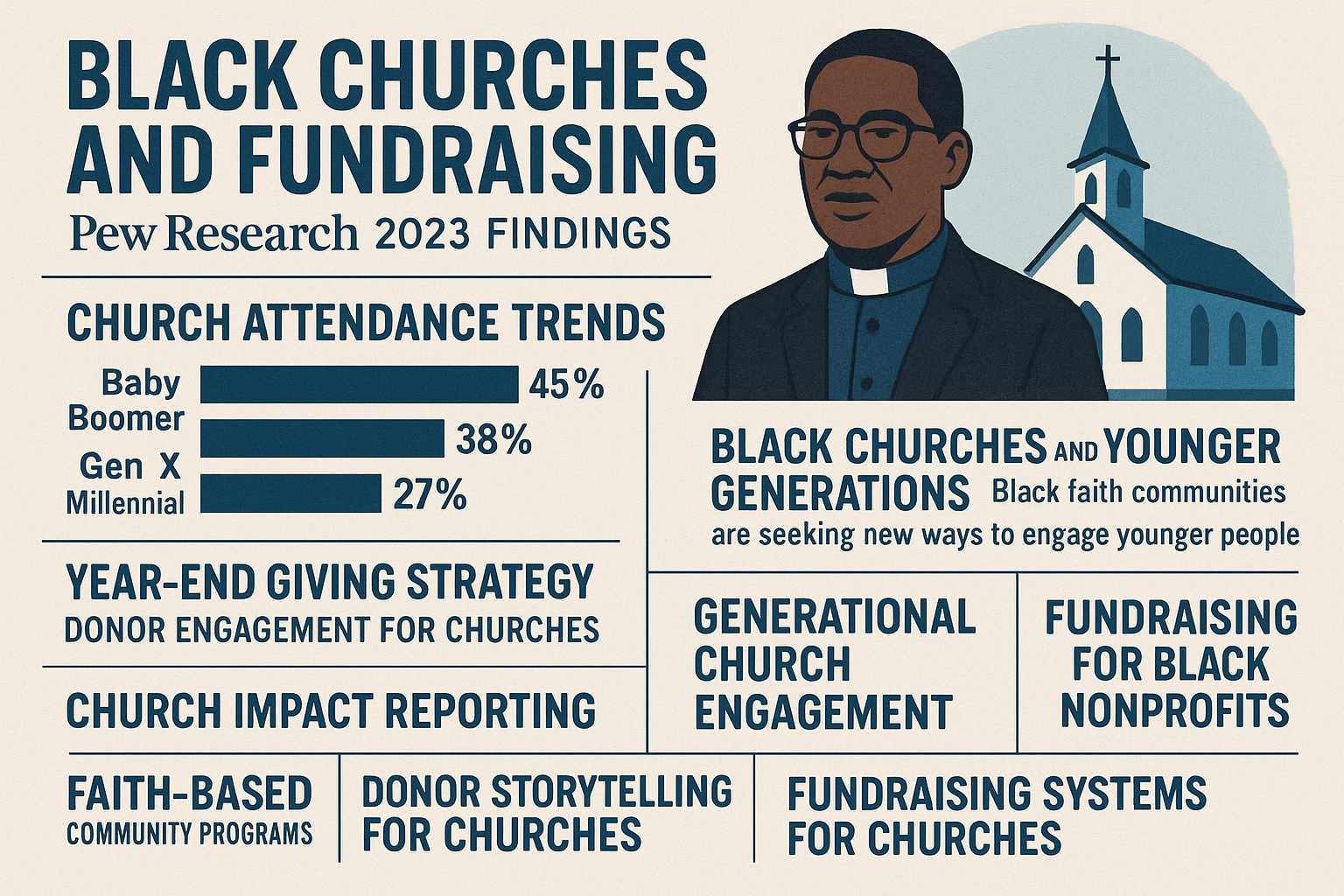
The Pew report confirms what many pastors already sense in their spirit:
- Our people still believe.
- Our communities still trust the Black Church when it serves.
- Younger adults still want faith — but they need the church to be clear, transparent, and relational.
This is a moment to move boldly and wisely.
Fundraising-Specific Actions
1. Report impact early and often.

People today — especially younger donors — need to see what their giving accomplishes. Regular stories, photos, and short updates about lives touched by the church create a sense of meaning and trust. When donors see results, they feel connected. When they feel connected, they give again.
Think of it as ministry and accountability wrapped together — not as a burden, but as a spiritual practice.
2. Make specific, personal asks to individuals — not just general appeals.

Churches already have digital giving in place. The next frontier is relationship-based fundraising — making personal invitations to support specific programs. This matches how younger adults give in other areas of life: they give when asked personally and specifically.
A personal ask communicates value, relationship, and trust. It elevates giving from something transactional to something intentional.
3. Tie every ask to a concrete project or result.
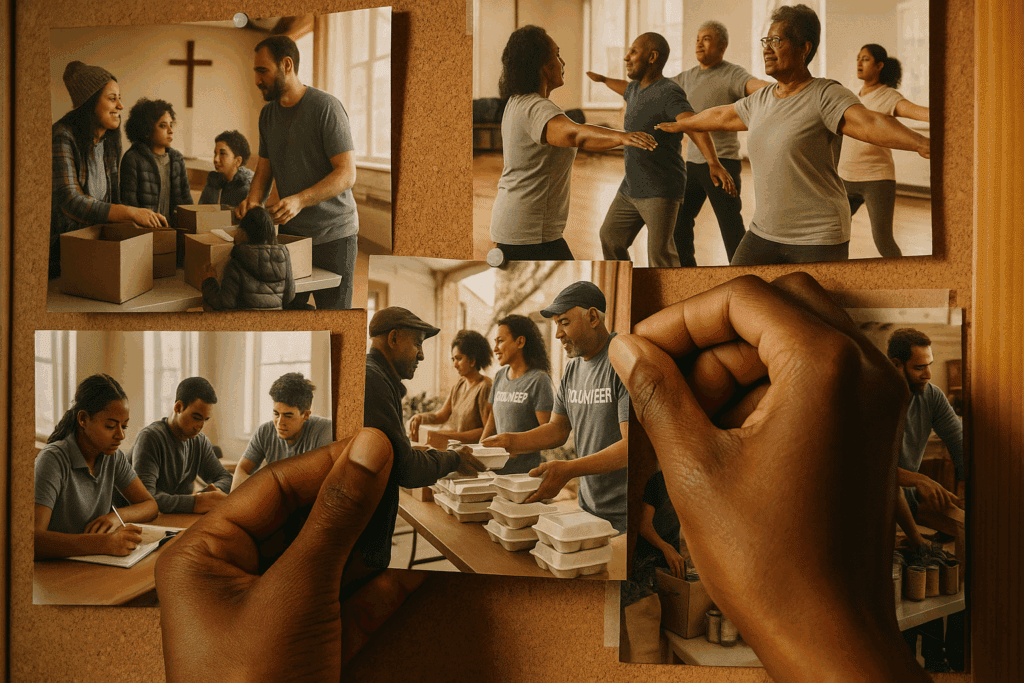
Younger generations don’t give to budgets — they give to impact. They give to problems being solved. They give to projects with outcomes.
“Support the church” is too vague for this moment.
But “Help us educate 25 young men,” or “Feed 40 families this month,” or “Sponsor counseling for youth dealing with trauma” — these are the kinds of missions that move people to action.
If you need help with any of this, please reach out to us, as this is our mission: To help African American Churches and African American Nonprofit thrives through modern fundraising. Schedule a call at www.WeAreNFM.com/contacts/
Pew Research Center. The Decline of Christianity in the U.S. Has Slowed, May Have Leveled Off.
Part of the 2023–2024 Religious Landscape Study (RLS).
Published February 26, 2025.
Washington, D.C.: Pew Research Center, Religion & Public Life.
https://www.pewresearch.org/religion/2025/02/26/decline-of-christianity-in-the-us-has-slowed-may-have-leveled-off/