
Many church leaders feel something changing in their ministry finances. Programs are growing. Community needs are increasing. Volunteers are working harder than ever. But the funding that supports those programs is not keeping up.
For decades, churches have relied on two main sources of funding.
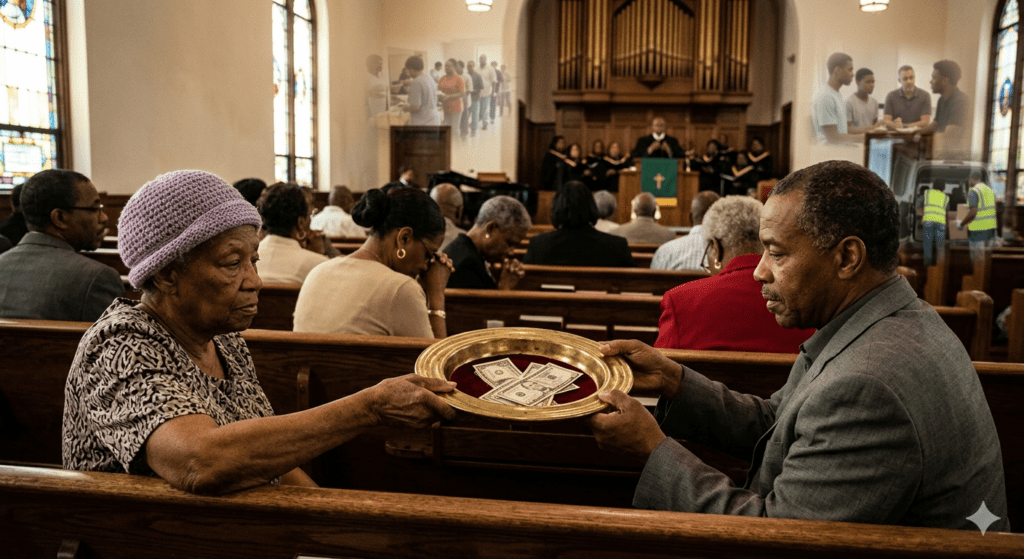
The offering plate.
Small fundraising events.
Fish fries.
Bake sales.
Car washes.
Church dinners.
These approaches helped churches survive for many years. They worked when programs were smaller and operating costs were lower. But today, they cannot carry the weight of modern community programs.
If your programs keep expanding while your funding stays flat, the issue is not your mission. The issue is the funding structure behind the mission.
Let’s walk through exactly why this is happening and what churches must build instead.
The Old Funding Model Worked When Programs Were Smaller
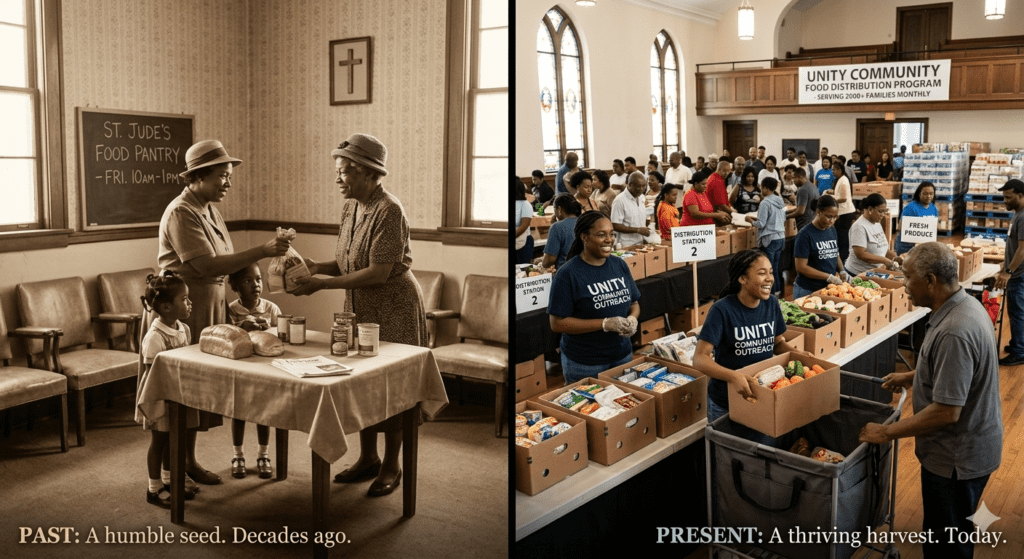
There was a time when the traditional church funding model worked well.
Church programs were smaller. Most ministries served a limited number of families. Costs were manageable. People tended to live in the same neighborhoods for decades. Giving patterns were predictable.
A typical funding structure looked like this:
Weekly offerings supported church operations.
One or two fundraisers supported ministry programs.
Occasional special appeals filled any gaps.
In that environment, the system worked.
But several things have changed.
The cost of operating ministry has increased.
The complexity of community needs has increased.
The expectations around accountability and reporting have increased.
At the same time, the funding model has remained largely the same.
Church programs are operating at a larger scale, but they are still being funded using a structure designed for a much smaller environment.
The mission grew.
The needs grew.
But the funding structure stayed frozen in time.
Program Demand Keeps Rising
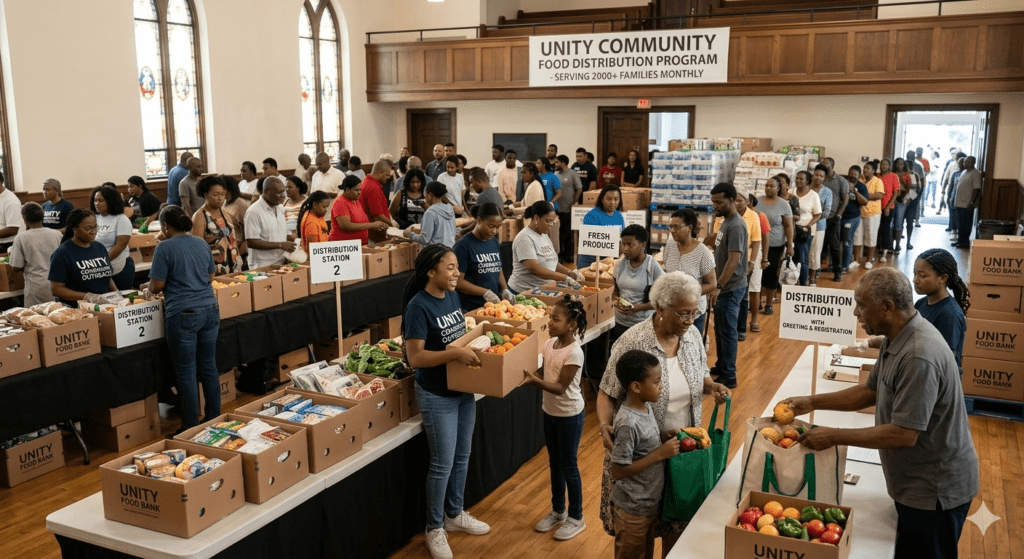
Across the country, churches serving their communities are experiencing a similar pattern. The demand for their programs keeps growing.
Food ministries are serving more families than ever.
Youth programs require trained staff and safe facilities.
Community outreach requires coordination and planning.
Counseling programs require trained support.
Programs that once operated informally are now functioning like full service community organizations.
When demand increases, several things happen at the same time.
More families are served.
More supplies are needed.
More staff or volunteers are required.
More administrative systems are required.
More documentation is expected from funders and partners.
Programs start to resemble departments inside an organization.
But the funding behind those programs is still being treated as a single moment during Sunday service.
That disconnect creates enormous pressure on church leaders.
What Happens When Funding Does Not Grow With Demand
When program demand grows but funding does not grow with it, churches usually follow the same path.
First, leaders stretch the existing budget.
Then volunteers work longer hours.
Then programs begin cutting services.
Eventually leaders begin asking themselves difficult questions.
Can we keep this program running?
Should we reduce the number of families served?
Should we pause the program entirely?
Many leaders blame themselves during this stage. They think they have failed to raise enough money.
But the issue is not effort.
The issue is structure.
Trying to fund modern community programs with an outdated model leads to exhaustion.
You end up carrying the needs of today with a funding strategy designed decades ago.
Why the Offering Plate Cannot Support Program Expansion
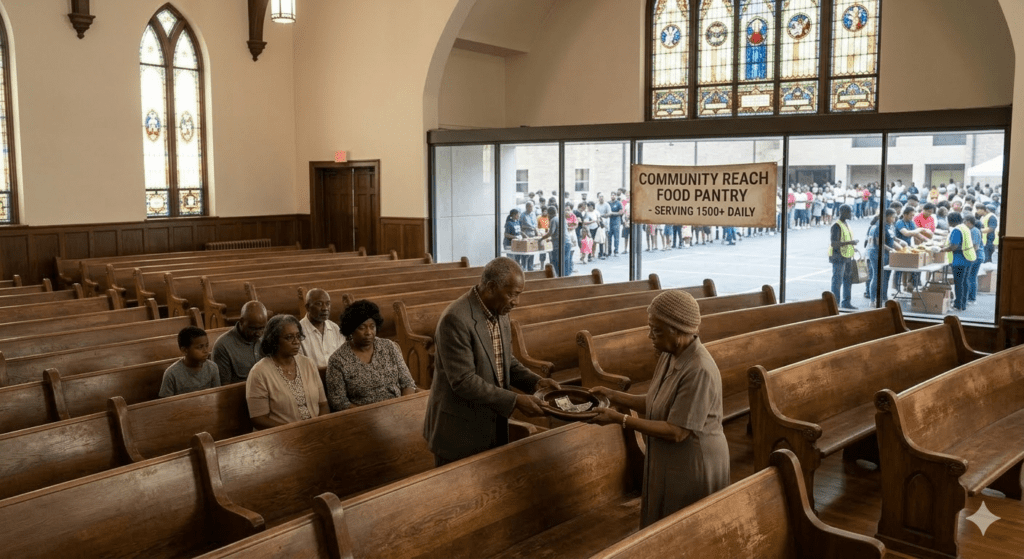
The offering plate plays an important role in church life. It supports the ongoing work of the church.
But it was never designed to support large scale community programs.
Offering revenue depends on several factors that church leaders cannot control.
Attendance fluctuations
Seasonal giving patterns
Inflation
Families relocating
Generational changes in giving
Economic instability
When program funding depends heavily on weekly attendance, stability becomes impossible.
A strong ministry program may continue serving the community every week.
But the funding behind that program rises and falls depending on factors unrelated to the program itself.
Your community does not need your program occasionally.
They need it consistently.
That requires a funding structure that operates with the same consistency as the program itself.
The Hidden Cost of Small Fundraisers
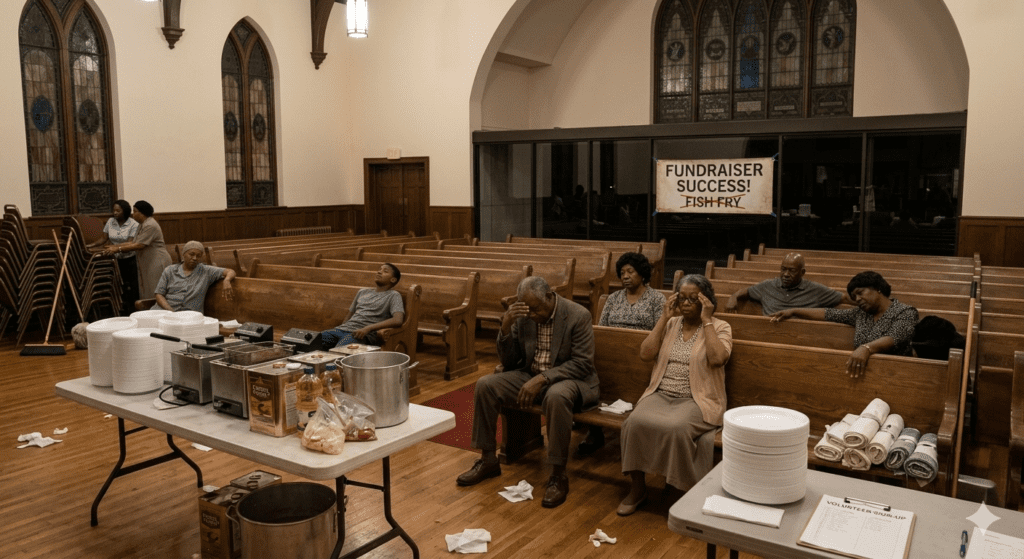
Small fundraisers can be helpful. Many churches have used them for generations.
But they carry a hidden cost that many leaders do not notice until burnout begins.
Each event requires planning.
Someone must organize the event.
Someone must promote it.
Someone must coordinate volunteers.
Someone must purchase supplies.
Someone must handle money collection.
And when the event ends, the same small group of volunteers often handles cleanup and follow up.
In many churches, the same ten people handle every fundraiser.
Over time, volunteers become exhausted. The church calendar fills with events. Fundraising begins to feel like constant activity rather than sustainable progress.
Another challenge is scale.
A fundraiser may raise a few thousand dollars. But large community programs often require tens of thousands of dollars to operate each year.
That gap between effort and outcome creates frustration.
Occasional events cannot support a long term program budget.
The Real Problem: Reactive Fundraising
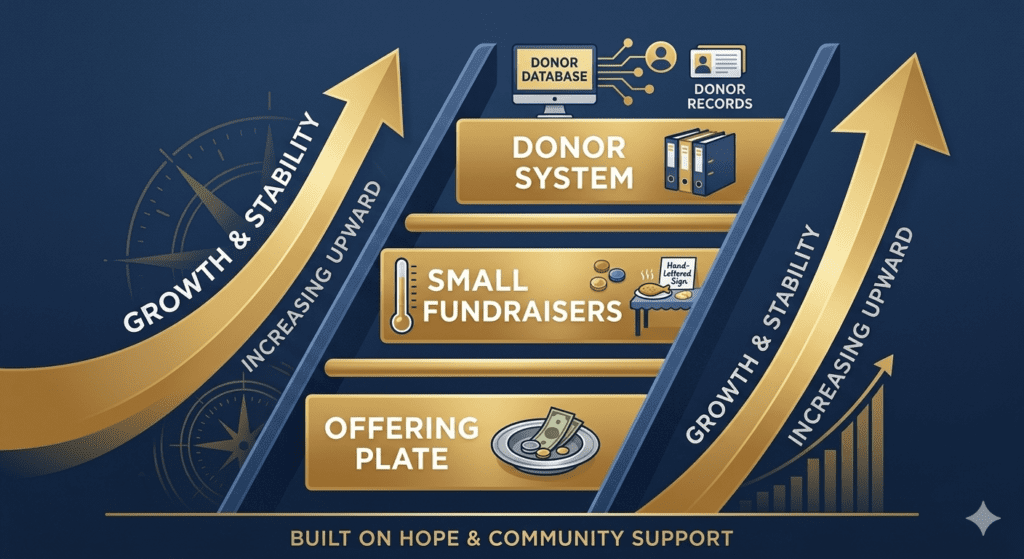
Most churches are not intentionally building a funding system. Instead, they respond when financial pressure appears.
This pattern shows up in many ways.
A program runs out of supplies. A fundraiser is scheduled.
The budget is tight. A special offering is announced.
Expenses increase. Volunteers scramble to raise money.
This approach is called reactive fundraising.
Reactive fundraising always happens after the problem appears.
And when fundraising only happens during emergencies, the entire ministry begins operating under stress.
The goal of a modern funding system is the opposite.
The goal is stability.
What a Sustainable Funding Model Looks Like

A sustainable funding model does not rely on emergencies or constant events.
Instead, it focuses on building relationships with individuals who care about the mission of the program.
These individuals become consistent supporters.
This type of system includes several key components.
A donor list that is actively maintained
Regular updates showing the impact of the program
Consistent communication with supporters
Clear outcomes showing how lives are changing
A calendar that organizes outreach throughout the year
A process for thanking supporters and keeping them engaged
But to really understand why this works, you have to look at how people actually make decisions about giving.
Most people do not give simply because they were asked once.
They give because they feel connected to something.
When someone understands the work your program is doing, when they see the faces of the people being helped, when they hear the stories of families whose lives have changed, something shifts.
They stop seeing your program as an expense.
They begin seeing it as something meaningful they want to be part of.
That is the psychological shift a donor system creates.
When people receive regular updates about your work, they begin to feel like insiders rather than outsiders.
They see the progress of the program.
They see the challenges the community is facing.
They see the results of their support.
Over time, this builds trust.
And trust is the foundation of consistent giving.
Think about how people support things they care deeply about.
Parents support their children’s schools.
Fans support sports teams they love.
Alumni support universities they attended.
Why?
Because they feel connected.
They understand the mission.
They see the results.
They feel like they belong to something bigger than themselves.
A donor system applies that same principle to community programs.
Instead of waiting until the budget is tight and asking for help, you keep supporters involved throughout the year.
You show them what the program is doing.
You show them the lives being touched.
You thank them for being part of that impact.
Over time, supporters begin to see themselves as partners in the mission.
When this structure is in place, funding stops feeling like a crisis.
It becomes part of the natural rhythm of the program.
The resources already exist in your community.
What is often missing is the structure that connects those resources to the mission.
Why Many Churches Never Build This System
Many church leaders want to build stronger funding systems. But several barriers get in the way.
First, most leaders are already overwhelmed managing ministry programs.
Second, fundraising skills are rarely taught in church leadership training.
Third, many churches believe fundraising means asking people for money repeatedly.
In reality, effective fundraising is about building relationships with people who care about the mission.
It is about sharing impact clearly and consistently.
When supporters understand the work and see the results, they often want to participate in that work.
But without a structure in place, those opportunities are missed.
Building a Funding System That Matches Your Mission
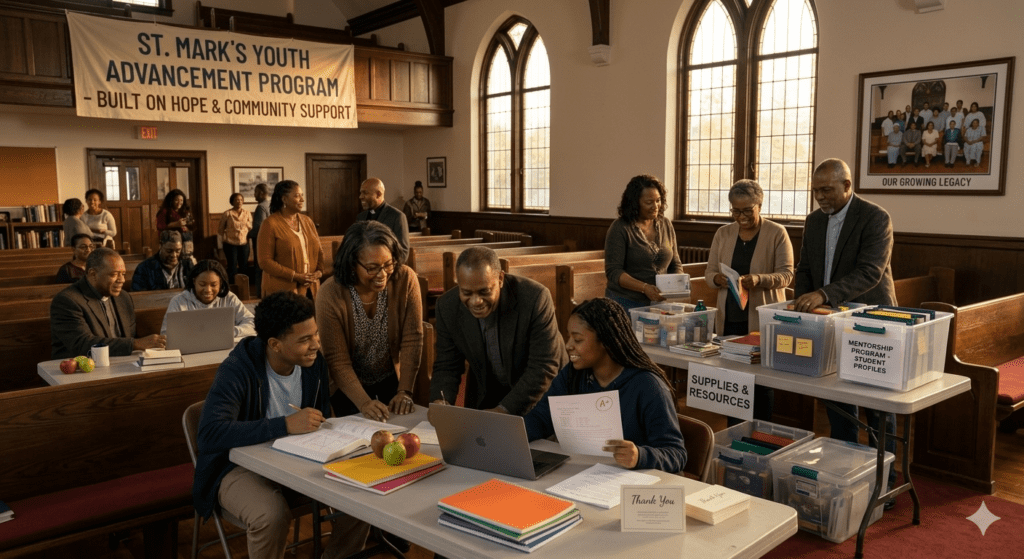
Community programs deserve stable support.
If your church is serving families through food programs, youth mentorship, counseling, housing assistance, or outreach initiatives, those programs should not depend on unpredictable revenue.
They should be supported by a funding structure designed for growth.
That structure includes
clear program messaging
consistent communication with supporters
organized donor outreach
measurable program outcomes
and a long term funding plan
When these elements are in place, churches can focus more energy on serving their communities instead of constantly worrying about finances.
The Bottom Line
The offering plate still matters. Small fundraisers still have a place.
But they cannot carry the full weight of modern community programs.
Programs serving today’s communities require consistent support.
That support comes from building a structured funding system built on relationships, communication, and clear impact.
When that system exists, ministry becomes more stable.
Volunteers become less exhausted.
Programs become sustainable.
And the community receives the consistent support it needs.
Next Step
If your church or nonprofit is serving the African American community and you want to move beyond reactive fundraising, it may be time to evaluate your current funding model.
You can schedule a short funding strategy conversation here:
During the conversation, we will review
your current funding structure
what systems are already working
what gaps may be holding your programs back
And we will outline what a stable funding system could look like for your organization.
Because strong programs deserve strong funding structures.


Если вы ищете надежный автосервис для вашей Тойота в Москве, вам повезло. Специалисты готовы осуществлять ремонт и обслуживание ваших автомобилей.
Если вам нужен качественный и надежный [url=https://servis-toyota-moskva.ru/remont-toyota-v-moskve/] автосервис Toyota в Москве[/url], мы предлагаем широкий спектр услуг для вашего автомобиля.
Работа с автомобилями этой марки требует особого подхода. Мастера сервиса постоянно повышают свою квалификацию для качественного обслуживания.
Техническое оснащение сервиса соответствует самым высоким стандартам. Наличие современного оборудования существенно упрощает процесс диагностики.
Наш автосервис обеспечивает надежность и долговечность вашего автомобиля. Ваше доверие для нас — наивысшая награда.
В современном маркетинге визуальный контент играет ключевую роль, поэтому важно понимать,
Какие примеры видеопрезентаций сейчас в тренде? Это способ за считанные секунды объяснить суть вашего предложения, который позволяет эффективно зацепить внимание аудитории.
Вот здесь можно почитать про виды и применение таких видео,:
Материал- https://baw-rus.ru/
Надеюсь, информация поможет вам в развитии ваших проектов!
I started writing down one thing at the end of every day — what I actually managed to do. Not a to-do list, not plans. Just one small win. It’s surprising how quickly it shifts your perspective.